A certification proves you can pass an exam. A practice range proves you can actually triage an alert under time pressure. Both matter, but SOC hiring managers increasingly weight the second one more heavily — and it's the one most newcomers under-invest in.
Where to build hands-on reps
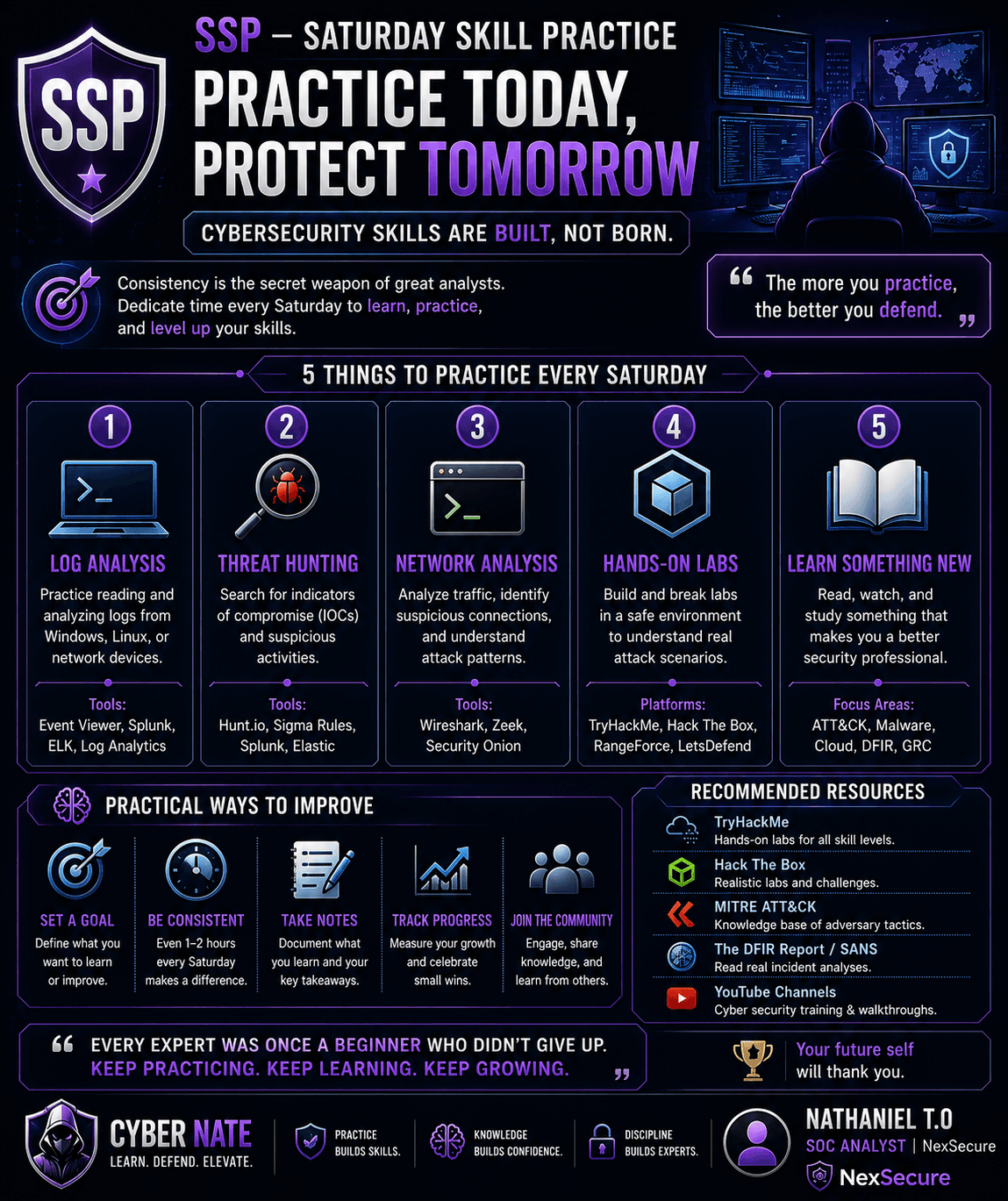
- TryHackMe & LetsDefend — structured, beginner-friendly SOC and blue-team scenarios with guided walkthroughs when you get stuck.
- Blue Team Labs Online & CyberDefenders — realistic investigation challenges built around actual incident artefacts: logs, memory dumps, and packet captures.
- Your own home lab — a small Windows/Linux VM setup with Sysmon and a free SIEM (like the Elastic stack) teaches you more about what "normal" looks like than any course, because you generated the noise yourself.
What to actually practice
Four skills separate confident SOC analysts from ones still finding their footing: reading raw logs without a pre-built dashboard doing the interpretation for you, triaging alerts fast enough to hit real SLA targets, following an incident response playbook end-to-end instead of stopping at detection, and writing an investigation summary a non-technical manager can actually understand. Certifications test knowledge; practice ranges test all four of these under conditions closer to a real shift.
Co-published with NexSecure Cybersecurity · Nathaniel T.O, SOC Analyst
Building a routine that sticks
Consistency beats intensity here. One structured lab a week, fully documented — what you saw, what you concluded, what you'd do differently — builds a portfolio of investigations you can speak to in an interview, which matters far more than a stack of unused certificates.
Key takeaways
- Practice ranges test the skills SOC interviews actually probe — certifications alone don't.
- A documented home lab investigation is interview material; an unused cert is a line item.
- Weekly consistency beats occasional intensive study sessions.